Townsville's Duplicate Image Problem: The Key Decisions That Will Shape What Comes NextUpdated
Council's land and asset records are riddled with duplicate imagery that undermines planning decisions — and fixing it won't be simple or cheap.
Council's land and asset records are riddled with duplicate imagery that undermines planning decisions — and fixing it won't be simple or cheap.
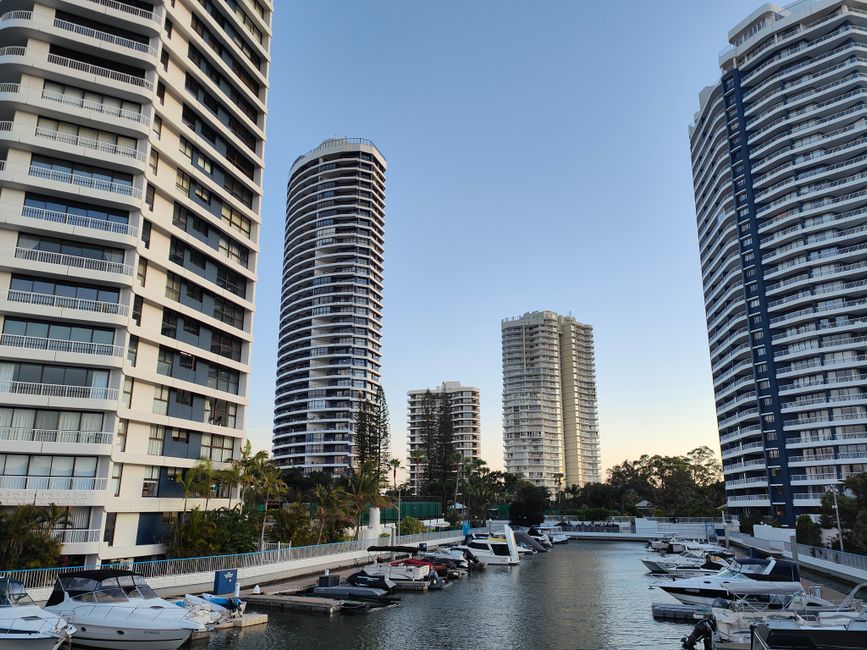
Townsville City Council is facing a decision point over how it manages duplicate and outdated aerial imagery embedded across its geographic information systems, a problem that planning officers and infrastructure teams say quietly distorts everything from flood overlay maps to development approvals. The issue has moved from back-office complaint to formal review, with council's spatial data unit now tasked with producing a remediation plan before the end of the 2026–27 financial year.
The timing matters. Queensland's state government rolled out updated cadastral mapping standards for local councils in January 2026, giving councils 18 months to align their internal imagery libraries with the new Department of Resources framework. For Townsville, which covers roughly 3,732 square kilometres from the CBD waterfront at The Strand out to the rural fringes of Hervey Range, maintaining consistent, non-duplicated imagery is not a bureaucratic nicety. It is the foundation on which Ross River Dam catchment overlays, post-2019 flood recovery infrastructure maps, and the city's hydrogen hub precinct planning near the Port of Townsville are all built.
Duplicate imagery occurs when multiple versions of the same geographic area — shot at different times, by different contractors, at different resolutions — are stored without a clear master record. When a planning officer at Townsville City Council's Marrja Street offices pulls up a parcel in Kelso or a road corridor through Bohle, they may be looking at imagery from 2021 sitting alongside a contradictory 2023 capture, with no flag indicating which is authoritative. Decisions get made on whichever layer loads first.
The practical consequences are not theoretical. In flood-prone suburbs like Idalia and Cranbrook — both of which sustained significant inundation during the January 2019 flood event — the accuracy of imagery underpinning development overlays can affect whether a proposed structure triggers a referral to the state government under the Planning Act 2016. A duplicate or superseded image that misrepresents ground level or vegetation cover by even a metre can shift a parcel in or out of a flood hazard area on paper.
Townsville City Council's spatial services team is not the only unit with skin in this. The Townsville Hospital and Health Service uses council GIS layers for emergency access route planning. James Cook University, whose Douglas campus abuts sensitive bushland corridors, has flagged the imagery issue in submissions related to its Long-Term Infrastructure Plan. And RAAF Base Townsville, a critical economic and defence anchor for the region, has its own perimeter buffer zones that rely on accurate council spatial data for land use compatibility assessments.
Council's spatial data unit faces three distinct choices, each with a different price and timeline. The first is a manual audit: a team reviews each imagery layer, flags duplicates, and archives superseded files. This is the slowest option but the cheapest upfront, with comparable local government projects in Queensland typically running between $180,000 and $250,000 depending on dataset size. The second option is to procure an automated deduplication platform — software that identifies conflicting layers algorithmically and flags them for human sign-off. Several vendors have pitched this to Queensland councils since 2024. The third option is a full imagery refresh: commission a new aerial capture of the Townsville local government area and rebuild the library from a clean baseline, a process that would likely cost north of $500,000 and take 12 to 18 months.
Budget deliberations for 2026–27 are already underway, with council's ordinary meeting schedule running through July and August. The spatial data remediation plan is expected to go to committee no later than September 2026. Whatever option council chooses, it will need to notify the Department of Resources under the new cadastral standards framework, and any contractor engaged for a fresh aerial capture would need approvals coordinated with RAAF Base Townsville given the city's controlled airspace arrangements.
For residents in development-active suburbs like Kirwan and Mount Louisa, the outcome has direct relevance: cleaner imagery means faster, more defensible development assessments and fewer delays caused by referrals back to council for spatial clarification. The next ordinary council meeting is scheduled for July 22, 2026, at the Townsville City Council chambers on Walker Street. That is the first realistic opportunity for the remediation scope to be publicly aired.
About this article
Published by The Daily Townsville
Spread the word
Newsletter