Ross River Dam at 61%: Townsville Residents Demand Straight Answers on Water FutureUpdated
From Kirwan to Aitkenvale, community members say they're tired of vague reassurances and want a concrete plan before the next dry season bites harder.
From Kirwan to Aitkenvale, community members say they're tired of vague reassurances and want a concrete plan before the next dry season bites harder.
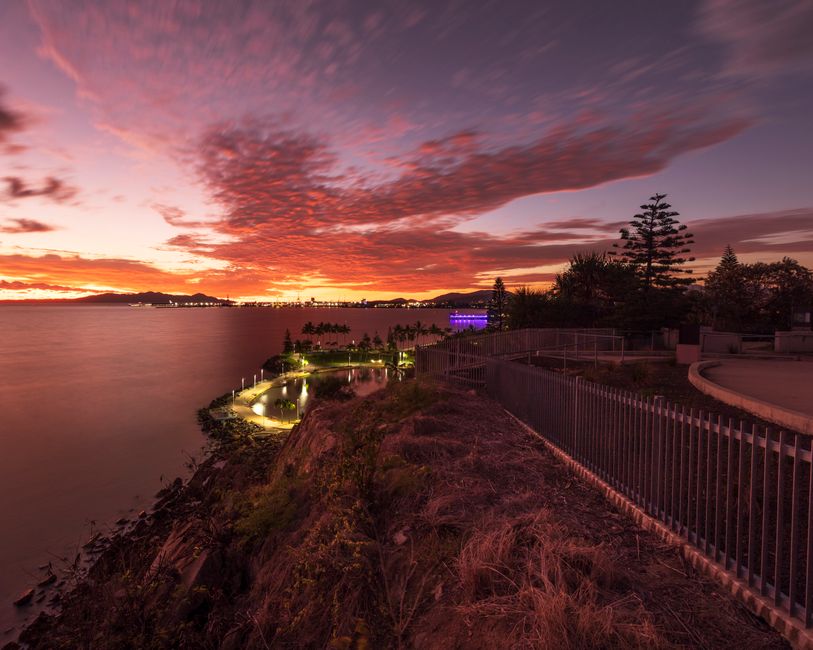
Ross River Dam sat at 61 percent capacity as of Thursday morning — down from 74 percent at the same point last year — and for many Townsville households, that single figure is the most important number in Queensland right now. Residents across the city's western and southern suburbs are watching the dam gauge with growing unease, seven years after the 2019 floods that paradoxically hammered home just how precarious the region's water management can be.
The concern is sharpened by what's happening elsewhere. Sydney just recorded its hottest June since 1859, and climate scientists are no longer speaking in hypotheticals about shifting rainfall patterns across northern Queensland. For Townsville, a city of roughly 200,000 people whose economy runs on RAAF Base Townsville, the Lavarack Barracks garrison, and a resurgent port sector, reliable water isn't an abstraction — it's an operational requirement.
At the Kirwan Shopping Fair on Thursday afternoon, a handful of residents waiting outside a pharmacy were blunt about their frustration. One woman, a mother of three who said she'd lived on Thuringowa Drive for eleven years, described receiving a Townsville City Council water advisory letter in late June that told her little beyond standard advice to fix leaking taps. "That letter took thirty seconds to read and told me nothing I didn't already know," she said. Another man, a tradesman who works regularly on building sites between the Bohle industrial estate and the CBD, said subcontractors on his jobs were already factoring potential water restrictions into project timelines. "If we go to Level 2 restrictions before Christmas, some of these builds slow down significantly."
The council's current Stage 1 water conservation measures, in place since May 15, restrict outdoor watering to before 9am and after 5pm. Garden centres along Woolcock Street reported a 20 percent drop in weekend foot traffic through June compared to the same period in 2025, with staff attributing at least part of that slide to customer anxiety about investing in plants they might struggle to water.
The Townsville Sustainability Network, which operates out of a shared office on Flinders Street East, has been running community information sessions at the Aitkenvale Library every second Wednesday since June. Coordinator figures show approximately 340 residents attended the three sessions held through June — a number the group describes as the highest turnout for any single-issue series they've run. The sessions have covered dam hydrology, household consumption targets, and the Townsville Water Security Program's long-term infrastructure proposals, including the Northern Queensland Water Infrastructure Authority's assessment of a potential Haughton Pipeline Stage 2 expansion.
Community advocates from Townsville's Pacific Island population, concentrated in suburbs including Cranbrook and Mount Louisa, have raised a separate concern: that water security briefings and official communications are not being adequately translated or distributed through Pacific community churches and cultural groups. The Townsville Pacific Communities Council, based on Nathan Street, formally wrote to Townsville City Council on June 23 requesting a dedicated consultation session. As of July 4, the council had not yet confirmed a date.
First Nations community members involved in the state treaty process have separately noted that conversations about water infrastructure rarely centre Indigenous water rights or knowledge. The North Queensland Land Council, headquartered in Townsville, has flagged water as a priority issue for the next round of treaty framework discussions scheduled for September 2026.
Townsville City Council's next scheduled public briefing on water security is set for July 22 at the Riverway Arts Centre on Lake Ross Drive. The council has confirmed the session will include updated dam storage projections through to the end of the 2026 dry season, plus a presentation on household rebate programs for water-efficient appliances — rebates of up to $200 per eligible fixture remain available through the Queensland Government's Home Energy Emergency Assistance Scheme. Residents wanting to submit written questions ahead of the July 22 briefing can do so via the council's YourSay Townsville portal before July 15.
About this article
Published by The Daily Townsville
Spread the word
Newsletter