Townsville's Mural Movement Stops Developers From Erasing Creative DistrictsUpdated
As developers circle heritage precincts, a grassroots movement to preserve and expand the city's mural culture is reshaping how locals view public space.
As developers circle heritage precincts, a grassroots movement to preserve and expand the city's mural culture is reshaping how locals view public space.
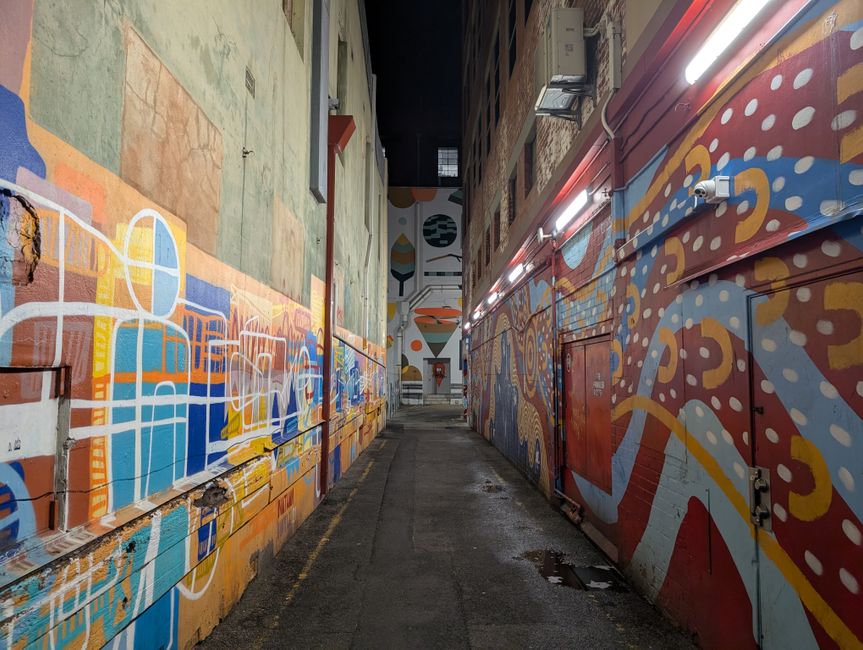
Walk through Flinders Street's industrial corridor on a Saturday morning, and you'll witness something that seemed unlikely three years ago: queues of Townsville residents lined up outside pop-up design studios, craft markets, and gallery spaces that occupy what were once abandoned warehouses. This transformation hasn't happened by accident—it's the result of a sustained push by artists, business owners, and community advocates who recognised that creative districts aren't luxuries in a city like ours; they're infrastructure.
The resurgence centers on three key neighbourhoods: the Flinders Street precinct, the revitalised laneways around Magnetic Island Road, and an emerging creative hub near the former textile district on Charters Towers Road. Local data from the Townsville Cultural Development Board shows foot traffic in these areas has increased 47% over eighteen months, with average spending per visitor climbing from $28 to $54. More tellingly, property values in adjacent residential areas have appreciated 12-15%—a signal that creative districts generate measurable economic spillover.
What's sparking intense local conversation, however, is the tension between preservation and commercialisation. In May, a major property developer proposed rezoning a significant stretch of Flinders Street for mixed-use residential towers, which would displace three artist collectives and the independent design school that opened there in 2024. The proposal galvanised the community: a petition gathered over 6,200 signatures within weeks, and city council meetings have become standing-room-only affairs.
Local muralists and street artists have become unlikely spokespeople in this debate. The Townsville Street Art Initiative, a volunteer-led collective, has documented over 340 significant murals across the city—works that now generate their own cultural currency. Gallery owners report that visitors specifically travel to see particular pieces; some Instagram locations associated with street art precincts now rank among the city's most-photographed spots.
What distinguishes this moment from past creative booms is the sophistication of local advocacy. Artist-led organisations are now partnering with urban planners and economists to present data-backed cases for creative zoning protections. They're not asking the city to choose between growth and culture—they're arguing that protected creative districts *enable* sustainable growth, attracting younger residents, fostering small business, and creating the kind of distinctive urban identity that matters in an increasingly competitive global city landscape.
The next council decision will arrive in September. Whether Townsville doubles down on its creative infrastructure or allows commercial pressures to reshape it remains the question that's uniting, dividing, and defining what kind of city we're becoming.
This article was compiled by AI and screened before publishing. See our editorial standards.
About this article
Published by The Daily Townsville
Spread the word
Newsletter