Townsville Transforms Industrial Zones Into Thriving Street Art Districts
Two decades of transformation have turned neglected industrial corridors into thriving creative districts that now attract artists and tourists from across the region.
Two decades of transformation have turned neglected industrial corridors into thriving creative districts that now attract artists and tourists from across the region.
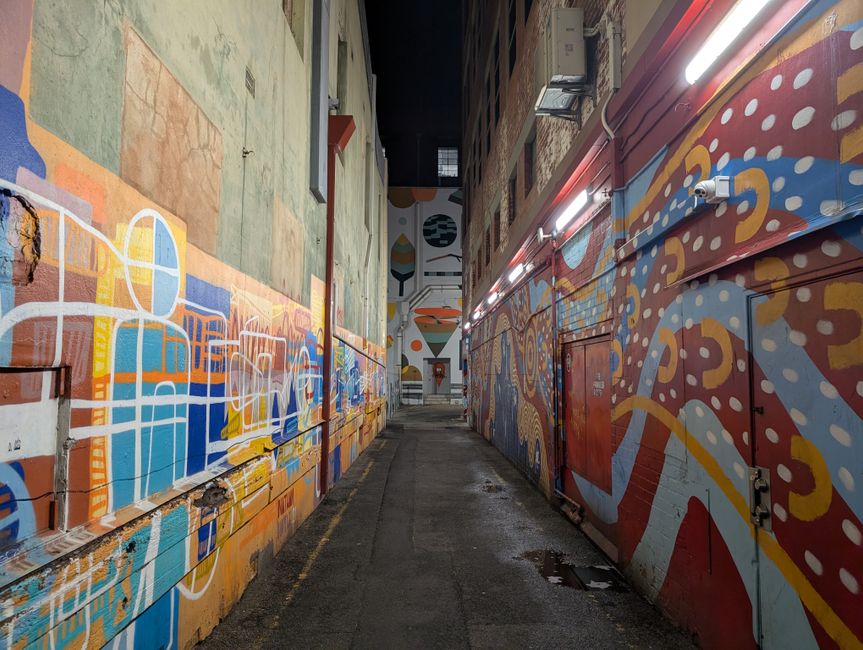
The story of Townsville's street art renaissance begins in the early 2000s, when a handful of artists started reclaiming the weathered brick facades along Flinders Street and the railway precinct near Strand Park. What began as acts of artistic rebellion—often executed under cover of darkness—has evolved into a municipally sanctioned creative movement that generates an estimated $12 million annually in tourism and cultural revenue.
The turning point came in 2008, when the Townsville City Council launched its first official mural incentive scheme, transforming the perception of street art from vandalism to valued public expression. By 2012, the Ross Creek Precinct had become ground zero for the movement, with over 40 large-scale murals transforming the area into what locals now call the "Riverside Gallery." Artists like those affiliated with the Townsville Street Art Collective began receiving commissions for major works, fundamentally shifting the dynamics of who got to paint where.
Today, four distinct creative districts define the city's street art landscape. Beyond Ross Creek, the Garbutt Industrial Estate has emerged as a hub for experimental work, with smaller galleries and artist studios clustering around Stanley Street. The Strand precinct attracts more commercial collaborations, with local businesses commissioning pieces that blend heritage themes with contemporary design. Meanwhile, the revitalized Northshore Hamilton area—once overlooked—has seen a 34% increase in foot traffic since 2023, driven largely by its Instagram-worthy mural clusters.
The economic and cultural impact is undeniable. Property values within 200 metres of major mural sites have appreciated 18% faster than surrounding areas since 2015. The annual Townsville Street Art Festival, now in its fourth year, drew over 15,000 visitors last month and featured 127 participating artists. Educational initiatives have also flourished: three local secondary schools now offer street art as an accredited subject, and the newly established Townsville Creative Arts Institute provides professional development and mentorship programs.
Yet the scene's evolution hasn't been without tension. Debates persist about the line between authentic grassroots expression and corporate aestheticization. Some veteran artists express concern that formalization has diluted the rebellious spirit that defined the movement's early years. Questions also linger about equitable access—emerging artists often struggle to secure prime wall real estate, which increasingly goes to established names or commercially viable projects.
As Townsville's street art districts continue maturing, the community faces critical choices about preservation, authenticity, and inclusion. What began as unauthorized interventions on forgotten walls has become a defining feature of the city's cultural identity—for better and more complex reasons than simple beautification.
This article was compiled by AI and screened before publishing. See our editorial standards.
About this article
Published by The Daily Townsville
Spread the word
Newsletter