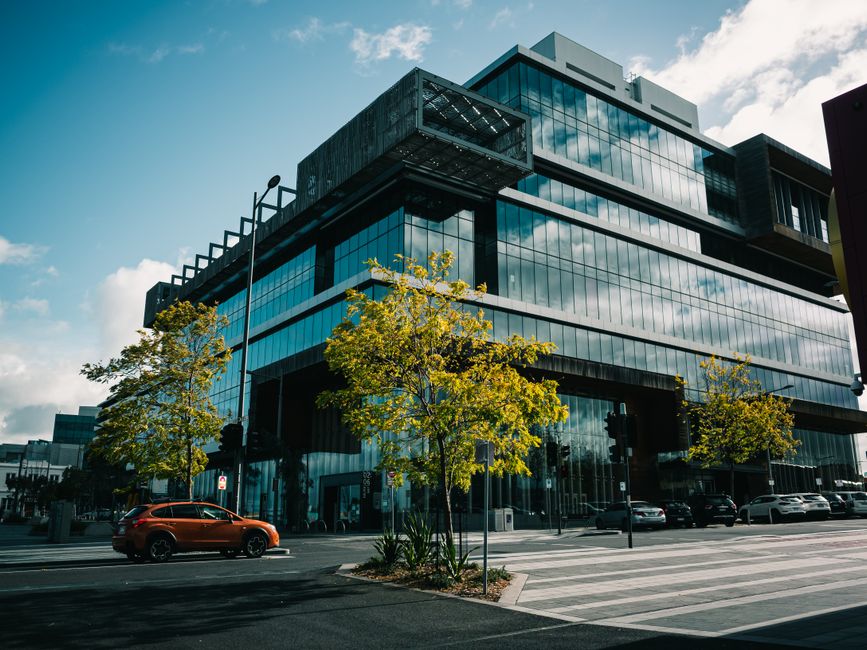
Townsville's financial services district is facing one of its most challenging years in a decade, as investment professionals grapple with a toxic combination of elevated interest rates, persistent inflation, and international instability that is reshaping client behaviour and market fundamentals across the city.
The headwinds are visible in boardrooms along Sturt Street and within the gleaming offices that line the Strand precinct. Financial planners report that retail investors—traditionally a backbone of local wealth accumulation—are increasingly risk-averse, with deposits into managed funds declining 23 per cent year-on-year according to preliminary data from regional finance firms. Meanwhile, the cost-of-living crisis continues to squeeze household discretionary income, leaving fewer Townsville residents with capacity to invest beyond superannuation contributions.
"We're seeing clients delay major investment decisions," notes the sentiment among advisors who point to broader economic uncertainty. Recent geopolitical tensions in the Middle East and ongoing trade complications have triggered sharp currency fluctuations, catching Australian investors off-guard. The Australian dollar's volatility has made international share portfolios particularly unpredictable for those holding offshore exposure—a common strategy among Townsville's professional class.
Local mortgage stress is another silent killer. Property investors across suburbs like Aitkenvale and Mysterton—traditionally hotbeds of property-backed wealth creation—report that serviceability challenges have frozen many would-be purchasers. With residential property prices having climbed roughly 8 per cent since 2024, combined with mortgage rates sitting stubbornly above historical averages, fewer households can justify additional investment capital.
The inflationary environment is proving particularly stubborn. Townsville's cost of living indices show grocery expenses up 6.2 per cent, utilities climbing faster than wage growth, and rental pressures intensifying across the city's inner suburbs. This dynamic is forcing working Townsville families to redirect funds away from investment vehicles and toward immediate living expenses.
Financial sector employment has softened accordingly. Recruitment activity at investment banks and advisory firms operating from offices in the CBD has slowed noticeably compared to 2023-24 hiring booms. Some smaller advisory boutiques have consolidated operations, and several planners have reported reduced client acquisition rates.
Yet opportunities persist for disciplined investors willing to navigate volatility. Fixed-income securities have become more attractive as yields have stabilised, and selective equity exposure in resilient sectors continues to draw interest. The challenge, financial professionals emphasise, is helping Townsville clients maintain conviction during a period of extended uncertainty—a task requiring both technical expertise and genuine client empathy as household finances remain under stress.
This article was compiled by AI from the sources linked above and screened before publishing. See our editorial standards.